Archive for the ‘Articles’ Category

Key aspects of human resource management

Sunday, August 17th, 2008

Great all-in-all review of all possible aspects of “life-cycles” in HR niche. The set of articles discuss all possible aspects of HR from searching perspective candidate to retirement plans. The review covers the key topics in HR management and how to keep business performance while your company hire new people or someone leave company.

  1. Life cycles in HR
  2. In-Between Happenings in Hiring the Best Employee
  3. Two Programs for Searching Future Employees before Graduation
  4. Five Helpful Tips on Job Sites’ Resume Browsing
  5. How It Helps Searching Employees from Existing Contacts
  6. Contributions of Training to Employee Performance and Organizational Management
  7. What a Holistic Education and Training Program can do for Organizational and Employee Development
  8. Giving Employees Time to Practice: An efficient Way to Enhance Productivity
  9. Choosing Training Models for Your Training and Hiring Needs.
  10. Management Tools to Enhance Employee Efficiency
  11. How to Align Employee Values and Aspirations towards Your Company Goals and Vision
  12. Managing Job Quality to Control Employee Output
  13. Using Various Rewards and Profit-Sharing Strategies in Motivating Employees
  14. A Pursuit to a Perfect Workplace
  15. Ensuring Employee’s Continued Success through Additional Training Programs
  16. Coping with employee loss
  17. Holiday fun at work
  18. Caring for employees’ health
  19. Employees on maternity leave
  20. Dealing with the resignation of an employee
  21. Appreciate the people in your company through proper recognition
  22. What should you do after an employee gets fired?
  23. Why people leave a company and stay with the competitor
  24. Make your employees stay through your retirement plan

Managing Employee Measurement

Saturday, July 5th, 2008

In every workplace, it is important to assess how employees perform. This is the only decent or acceptable way to reach out to the employees and inform them of their shortcomings and the good things they have done for the company. The problem is, not all companies have standard processes for employee measurement. It is too bad that some employees are laid off for reasons that are not substantiated. These employees are often victims of bias and poor management. In relation to this, poor judgment, unclear company policies, and undocumented occurrences of infractions are just a few of the many causes of poor employee assessment.

There are several ways to measure an employee’s performance. First off, employees are expected to work. This should be made clear to them and there should be a clear set of guidelines of what is tolerable attendance behavior is from not. There has to be a policy on how many absences are acceptable. You may add to this the number of occurrences for tardiness an employee is allowed to incur for a certain period of time before he is issued a warning. In relation to this, memos and the frequency of serving them, plus the criteria for serving them, should also be included in the attendance policy. Another thing that can be added is a rolling period for employees. A rolling period is a certain amount of time that the employee must show attendance improvement, after which, his records will be cleared of any negative warnings and memos.

Another thing that one can measure in terms of performance management is productivity. There are many ways to measure this and this greatly depends on the industry. For manufacturing industries and factories, the common type of measurement used is output. Employees are expected to finish a number of products in a day. In the sales industry, the common basis for productivity is sales. Salesmen are measured based on the sales they have generated per day, per week, and per month, this is commonly called quota.

Another major thing that can be measured is behavior. Form country to country, or even city to city, there are certain social norms that employees must abide to. The difficult part about judging behavior is its non-objectivity. Judgment on behavior, more often than not, is pretty much affected by perception. Admittedly, no one can establish a complete policy about acceptable behavior, let alone behavior that will not be tolerated. In essence, the handbook should specify as many actions that the company will not tolerate, such as gambling, fighting, horsing, loitering, destruction of company properties, vandalism, etc.

Keep in mind that when you make these policies, ensure that the policies are aligned with existing labor laws. Employee measurement is something that should never be taken lightly since this is an indicator of the employee’s future in the company. This is also a great factor in motivating employees to achieve more—knowing that their efforts are being recognized and that management is watching closely as to how they will perform. Of course, performers should be rewarded and non-performers should receive appropriate attention.

If you are interested in employee measurement, check this web-site to learn more about worker metrics.

Typical Factors on the HR Costing Scorecard

Thursday, June 26th, 2008

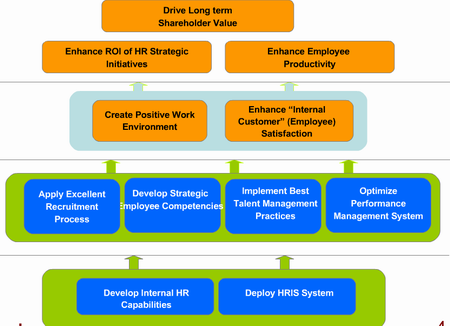
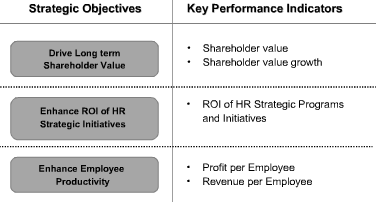
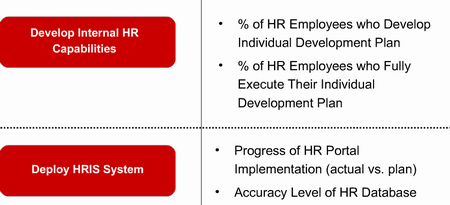
The Human Resource Department (HRD) is indeed one of the departments in the business that would fall in the background. This is because the HRD is not really that visible, as when compared to the Managerial department or the Accounting department. However, what a lot of people fail to keep in mind is the fact that in spite of the HRD being in the background, it still plays a very important role in the overall success of any business. This is because the HRD is the department that handles the most valuable asset any company can have, and that is, its workforce, its very employees. This is precisely why there are indeed costs entailed in running the HRD, and to determine the efficiency of the department in running these costs, it is but apt to implement the HR Costing Scorecard.

You may be wondering to yourself, is there really a need to implement such a scorecard? There have been so many theories and studies conducted about the implementation of the balanced scorecard. These studies clearly show that there is much promise in the role that the balanced scorecard plays. However, it is quite easy to ignore this importance and significance of the balanced scorecard as a managerial tool in the HRD. Add to the fact that the costs entailed in the HRD are not too visible in nature at all.

The HRD handles people, right? Just how do you quantify human value here? How do you quantify the value or the worth of a particular employee? There are so many factors at play here that it is quite difficult to place a numerical figure on the worth of a certain employee, let alone the thousands of employees under the wing of, let us say, a multinational call center. The typical call center would be handling a number of accounts, which means there are hundreds of employees for these accounts. Now, learning is a lifetime process, so there would inevitably be a need to hold training sessions or programs for the call center representative, to enhance their knowledge and skill sets. This alone is already an expense that the HR has to deal with. Costs are entailed in hiring the trainer, for instance, as well as in booking the venue, plus the food and beverages offered to both the trainer and trainees. These are visible costs; however, the return of investment, or ROI, would be intangible here. This is because the ROI here would be dependent on whether or not the trainees are able to assimilate the new knowledge and skill set that comes after the training program. This should then be included in the HR Costing Balanced Scorecard.

This is just one of the many costs that the HRD has to deal with. Other costs would pertain to the new hires themselves, with retention in mind. The thing to look for here is the percentage of new hires that make it through the probationary period and achieve regular status. As for the regular employees, you should also look for the percentage of employees who have been promoted to higher positions. Performance appraisal is another aspect you should include on the HR Costing Scorecard.

If you are interested in hr costing scorecard, check this web-site to learn more about hr costing kpi.

The Need to Implement HR Costing Metrics

Thursday, June 26th, 2008

Each and every department in any business would always have costs to contend with. The HR department is no exception here. It is quite easy to assume that the HR department is devoid of costs, since the costs here are not all that visible, like that of the accounting department, or the IT department. Still, the HR department has costs and expenses, which should be analyzed to ensure that there is promising return of investment here. After all, the HR department is that division of the company that deals with the employees, the very human assets of the company. Thus, there should be a formal system to determine the return of investment for each cost the department makes. And for this, there has to be certain HR costing metrics to be implemented.

Of course, it is easy to assume and even say that the HR department does not really entail that many costs. This is because the department itself actually operates more on the background. But if you really think about it, if you get down to the nitty-gritty roles of the department, you will soon see the many costs that the HR department has to deal with every single day.

For instance, the mere activity of hiring new people entails a lot of costs already. Let us place this in the context of call centers, for instance. The call center industry is just laden with a lot of stiff competition nowadays. One call center offers such an attractive compensation and benefits package. But do not sign that contract right away because there just might be another call center that can match, or even better, that offer! Thus, the HR department of any call center would have to come up with the most attractive compensation and benefits package to grab the attention of potential employees. And how else can the department do that? By conducting research, studies on the preferences and current trends of call centers in the industry. This obviously entails costs for the department.

And if that is not enough, what about the many times that the HR department has to hold job fairs? Booking venues clearly entails a lot of costs already. How would you determine the return of investment here? A number of factors would have to be considered, such as the percentage of people hired over the span of the job fair, the percentage of these new hires that can make it to the probe status, as well as the ones who can achieve regular status after the probationary period. All of these should be included on the metrics scorecard.

As always, the number of metrics to be included here should be pegged at a minimum. It would seem sensible and even tempting to include many aspects as metrics here, but do not give in to the temptation. This is because it would only make the analysis and interpretation of the acquired data all the more complicated. Thus, your HR costing metrics should be pegged at a minimum still. If you are not too sure about the factors to include as metrics here, do not be alarmed. There are so many sources that you can check, as a guide to implement the different metrics that are ideal for your business.

If you are interested in hr costing metrics, check this web-site to learn more about hr costing kpi.